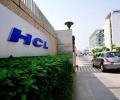
Shares of HCL Tech hit a fresh record high of Rs 1,118.55 on Friday, up 2 per cent on the BSE in intra-day trade, surpassing its previous high of Rs 1,101 touched on Thursday in intra-day deals.

Stating that a weak fiscal position continues to constrain India's sovereign ratings, Fitch said the next government's medium-term fiscal policy will be of particular importance from a rating perspective.

Any market correction, analysts say, would be an attractive entry point for risky assets, which should do well over the medium-to-long term.

Though most analysts expect the global central banks to keep the liquidity tap open, valuations of Indian markets, they say, are beginning to look stretched. Against this backdrop, they remain cautious, with some even expecting a minor correction from here on.

Global credit rating agency Standard & Poor's on Thursday said India's economic growth may fall marginally to 7.5-8 per cent, but inflation outlook remained stable at 5-5.5 per cent in 2007.

US election results may not reverse Indian markets' bearish trend, says Devangshu Datta

Since its peak, the S&P BSE Sensex has dropped nearly 3,000 points.

Very gradual fiscal consolidation glide path with looser-than-expected fiscal policy; good quality spending mix and reasonable assumption on fiscal math; and focus on privatisation, asset monetisation and long-term funding for infrastructure investments, according to Morgan Stanley, are the three key themes from the Budget 2021.

Money will flow to Europe, Japan - and the emerging markets, including India.

Stock specific action is seen with some of the prominent companies posting their quarterly numbers.

The markets have been unable to sustain at higher levels as a rise in bond yields globally, especially in the US have dented sentiment. Surging commodity prices, especially crude oil that have now hit $70 a barrel (Brent) coupled with inflation woes and fear of sporadic lockdown across major economic hubs back home as Covid cases rise have chased the bulls away. In the short-term, analysts expect the markets to remain volatile as they react to news flow - both from overseas and developments back home. Investors, they say, need to keep a tab on how the US treasury yields move, which in turn will have a ripple effect on how big money moves across developed (DMs) and emerging markets (EMs), including India.

Motilal Oswal, chairman and managing director, Motilal Oswal Financial Services, tells Puneet Wadhwa that with Moody's upgrading India's sovereign rating and earnings growth coming back, the country will remain a hot destination for foreign investors.
A day after a record-breaking run, stock prices continued to soar on Wednesday amid expectations of better-than-expected earnings by IT bellwether Infosys Technologies on Thursday.

Thus far in FY21, BSE, NSE have rallied 70 per cent and 71 per cent, respectively.

Most expect these bubbles to break in short order and cause serious financial pain to anyone who's foolhardy enough to remain invested in financial assets.
The breadth, indicating the overall health of the market, was slightly positive

'The pressure on relative performance and the feeling of being left out among many investors may also account for the belief among many that this has to be a technology stock bubble.' 'The feeling of a bubble is also reinforced by the extreme performance gap between growth and value investing.' 'While at first glance, one can only stand back awestruck by the wealth creation delivered by technology stocks globally. It does not seem at all like the internet bubble of 1999-2000, says Akash Prakash.

In terms of stock selection, India continues to benefit from two phenomena - the big getting bigger and availability of quality stocks in relative abundance compared with its Asian peers.

Analysts attribute this outperformance to the government's proactive economic reform measures

The loss of income has severely dented the loan repayment ability of small borrowers

India's macroeconomic situation is improving fast and the country's GDP growth will turn positive in the third and fourth quarters of the current financial year, eminent economist Ashima Goyal said on Sunday. Goyal in an interview to PTI said the management of the COVID-19 pandemic and gradual unlocks announced by the government have helped in avoiding multiple COVID-19 peaks. The growth estimates by different agencies are being continuously revised, she said.

Moody's rates India's outlook at stable.

Market players said the sell-off was triggered by pessimism that the government may not be able to balance growth with macro-stability.

Dr Reddy's was the top gainer in the Sensex pack, rising over 3 per cent, followed by PowerGrid, TCS, HCL Tech, Infosys and Reliance Industries. On the other hand, L&T, IndusInd Bank, Bajaj Finserv and Bharti Airtel were among the laggards.

ICICI Bank extended yesterday gains, rising 10% in two trading sessions
Decline in the rupee coupled with a slide in the crude oil prices have dented the sentiments.
ITC, Sun Pharma, Cipla and Tata Steel were top gainers on BSE Sensex
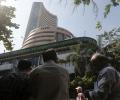
The market breadth, indicating the overall health of the market turned negative from positive

The FATF continuing Pakistan in the 'Grey' list means its downgrading by IMF, World Bank, ADB, EU and also a reduction in risk rating by Moody's, S&P and Fitch.

10 stocks which are most popular with brokerages right now and are expected to deliver maximum upside over the next 12 months.

Financials were among the top losers along with Sun Pharma and index heavyweight Reliance Industries

Analysts say that the focus now shifts to global events

Most Asian markets were trading weak on Monday.

Jeff Bezos tops Harvard Business Review list on financial parameters but stands 87th overall.

A total of 183 stocks rallied 10 per cent, of which 32 stocks saw price appreciation of 20 per cent each.

With a rise of around 30 per cent in the benchmark index S&P BSE Sensex, 2014 has been the best year for Indian equity markets since 2009, when the benchmark index surged 81 per cent.

'The Indian economy is in slowdown and growth may stay slow,' notes Devangshu Datta.

A weak dollar overseas also aided the rupee rise while fresh sell-off by foreign funds in domestic stocks capped the currency's gains, forex dealers said.
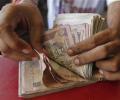
The rupee had lost 21 paise on Tuesday's trade.

The Modi government has handled inflation far better than any government in the past two decades. Both the stock market and currency indices have begun to show confidence in the economy, despite the mounting global headwinds of trade.
